
On Sunday, February 9, 2025, the United States experienced one of the country’s most memorable cultural and entertainment spectacles of the year: Super Bowl LIX, culminating in a dominant victory by the Philadelphia Eagles and a record‑setting halftime show that captivated millions of viewers across the nation. This event, blending top‑tier athletic achievement with groundbreaking musical performance, underscored the Super Bowl’s evolution into a cultural phenomenon that resonates far beyond the realm of sports.
At the Caesars Superdome in New Orleans, the Philadelphia Eagles defeated the Kansas City Chiefs with a decisive 40–22 victory, denying the Chiefs a rare three‑peat championship run. The Eagles’ performance was defined by a combination of strategic offensive execution and relentless defense, stifling the Chiefs’ high‑powered offense led by quarterback Patrick Mahomes. Eagles quarterback Jalen Hurts, completing 17 of 22 passes for 221 yards and contributing a rushing touchdown, was named Super Bowl MVP for his leadership on the field.
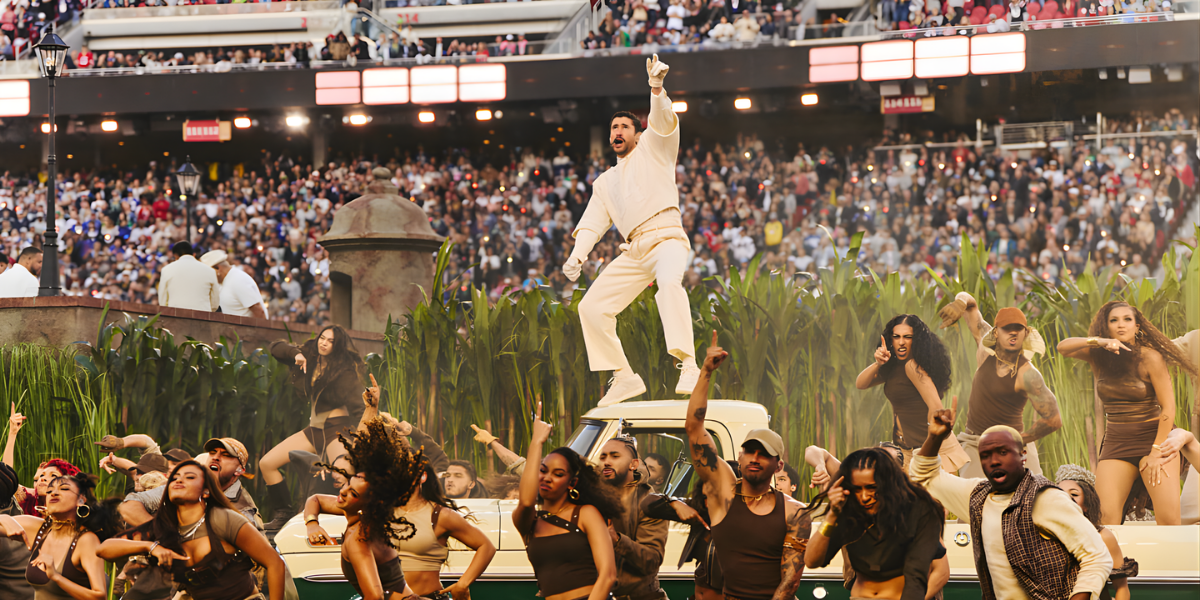
Beyond the scoreboard, the 2025 Super Bowl cemented its place in entertainment history through its halftime show, headlined by Grammy Award‑winning rapper Kendrick Lamar. The performance, officially titled the Apple Music Super Bowl LIX Halftime Show, became the most‑watched halftime show in U.S. history, drawing an average of 133.5 million viewers domestically across television and streaming platforms. This figure surpassed longstanding audience records and highlighted the increasing cultural importance of the halftime segment as a standalone event.
Kendrick Lamar’s performance was a dynamic showcase of his musical range and artistic vision, featuring hit songs such as “Not Like Us,” as well as appearances by collaborators including SZA and comedian‑actor Samuel L. Jackson. The spectacle blended high production values with narrative storytelling, reinforcing Lamar’s status as one of contemporary music’s most influential and innovative artists.
For fans and cultural observers, the halftime show marked several milestones. Not only did it elevate hip‑hop to new heights on one of the world’s largest live entertainment platforms, but it also demonstrated how major musical acts can use the Super Bowl stage to expand their reach and influence. Industry data show that such performances often translate into significant increases in music streams, downloads, and social media engagement long after the final whistle.
The confluence of sports and music on February 9 also spotlighted the Super Bowl’s role as a global entertainment event. Originally conceived as America’s premier football championship, the Super Bowl has for decades integrated blockbuster musical performances into its programming, turning the halftime show into a stand‑alone cultural moment. Over the years, legendary performers such as Michael Jackson, Prince, and Rihanna have graced the stage; Kendrick Lamar’s 2025 appearance continued this tradition while uniquely anchoring hip‑hop culture at the center of the spectacle.
In addition to its entertainment impact, the event generated considerable conversation across social media, news outlets, and pop culture platforms. Fans and critics alike debated everything from the musical set list to cameo appearances, further illustrating how the Super Bowl serves not just as a sports finale but as a national gathering point for shared cultural experiences.
For the Eagles and their supporters, the victory added a second Super Bowl championship to the franchise’s history and became a moment of civic pride. For Kendrick Lamar, the halftime show represented both artistic achievement and cultural validation, highlighting the potential of music to unite diverse audiences in a shared moment of spectacle and celebration.
As the nation reflects on the significance of February 9, 2025, it is clear that the Super Bowl continues to be more than a game—it is a stage where sports excellence meets cultural expression, offering unforgettable moments that reverberate far beyond Sunday night.
