
A Rare Solar Eclipse Brings a Celestial Spectacle to Parts of the United States
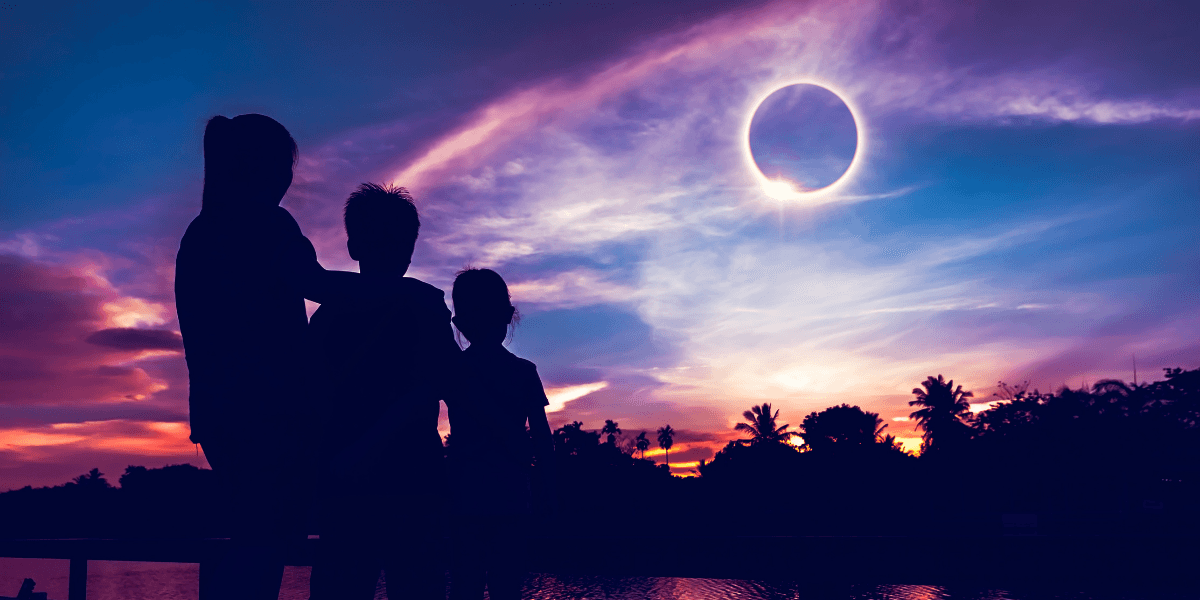
A rare solar eclipse captured attention across the United States on August 12, 2026, as parts of the country experienced a partial eclipse while a total solar eclipse unfolded across portions of the Northern Hemisphere. The event brought astronomy into the public spotlight and gave skywatchers, photographers and communities across parts of the United States an opportunity to witness a striking change in the daytime sky.
The August 12 event was officially a total solar eclipse, meaning the Moon passed directly between Earth and the Sun and, along a narrow path, completely covered the Sun. The path of totality stretched across portions of northern Russia, Greenland, Iceland, the Atlantic Ocean, northern Spain and a small part of Portugal. The maximum duration of totality was about two minutes and 18 seconds. However, the United States was outside the path where totality occurred.
Instead, portions of the United States experienced a partial solar eclipse. The visible area extended across parts of Alaska and sections of the northern and eastern United States. The amount of the Sun covered by the Moon varied considerably depending on location, giving observers in different states very different views of the same astronomical event.
Alaska offered some of the strongest views in the United States. In Anchorage, for example, approximately 28 percent of the Sun was covered at the height of the eclipse. Other parts of the country experienced a smaller portion of the event, including communities across the Northeast, Midwest and Mid-Atlantic regions. The partial eclipse was not visible across the entire country, making location an important factor for anyone hoping to observe it.
For American audiences, the event provided a different experience from the total solar eclipse that crossed large portions of the United States in April 2024. During a total eclipse, observers inside the path of totality can see the Moon completely cover the Sun for a short period, producing a dramatic darkening of the daytime environment. On August 12, American viewers outside the path of totality saw only part of the Sun covered.
Even so, the partial eclipse offered plenty of opportunities for observation and photography. The changing position of the Moon across the Sun created a distinctive visual subject for photographers and artists. Natural light also changed subtly during the eclipse, creating unusual conditions for landscape and outdoor photography. For a culture and entertainment audience, these visual qualities helped turn an astronomical event into a shared creative experience.
The eclipse also demonstrated how astronomical events can bring people together. Skywatchers gathered in suitable viewing locations, while others followed the event through broadcasts and photographs from areas experiencing totality. Images from Iceland, Spain and other locations along the path of totality showed the Moon completely covering the Sun, while photographs from North America documented the partial phases visible across the region.
Safety remained an important part of viewing the eclipse. Looking directly at the Sun without appropriate protection can cause serious eye injury, and the partial phase of an eclipse does not make direct viewing safe. Specialized solar-viewing glasses or other equipment specifically designed for observing the Sun are required. Ordinary sunglasses do not provide adequate protection.
The eclipse also served as an opportunity for public education. Solar eclipses provide a straightforward way to observe the relationship between the Sun, Moon and Earth. The Moon’s movement across the face of the Sun is the result of a precise alignment involving all three bodies. Although eclipses occur regularly somewhere on Earth, the opportunity to observe one from a particular location is much less common.
For artists, photographers and cultural observers, the August 12 eclipse offered more than a scientific phenomenon. It temporarily changed the appearance of the sky and encouraged people to stop and observe an event that was both predictable and fleeting. Such moments can inspire photographs, visual artwork, written reflections and other forms of creative expression.
The event’s broader significance also came from its international reach. While people in parts of the United States experienced a partial eclipse, millions of observers elsewhere were able to witness totality. The same celestial alignment therefore produced different experiences depending on geography, connecting viewers across countries through a single astronomical occurrence.
For Americans who missed the eclipse or saw only a small portion of it, the event is also a reminder that solar eclipses are highly dependent on location. Future eclipses will offer additional opportunities for observation, but each will have its own path and viewing conditions.
The August 12, 2026 solar eclipse ultimately brought together science, photography, public curiosity and cultural appreciation. Although totality did not cross the United States, the partial eclipse visible across parts of the country still offered a memorable daytime spectacle. For those who watched safely, it was a brief opportunity to witness the Moon and Sun align in one of nature’s most recognizable celestial events.

Artist Highlight Contributor
Covers live culture and emerging artists, tracking the galleries, festivals, and stages where new work arrives first.
This article features partner, contributor, or branded content from a third party. Members of the Artist Highlight editorial staff were not involved in the creation of this content. All views and opinions are those of the contributor alone.
You May Also Like

Queensbridge Turns A Sold Out Festival Debut Into A New Three Week New York Run

Pearl Jam Returns to the Stage at Ohana Festival With a New Live Chapter
Forgotten Island Brings Filipino Folklore And Friendship To The Big Screen

Beck’s Ride Lonesome Finds Beauty In Solitude Through A Rich Return To Reflective Folk Rock

Gregory Porter Brings Jazz And Soul To New York For The 2026 Oneness Festival