
When a Chatbot Dialogue Became a Human Journey
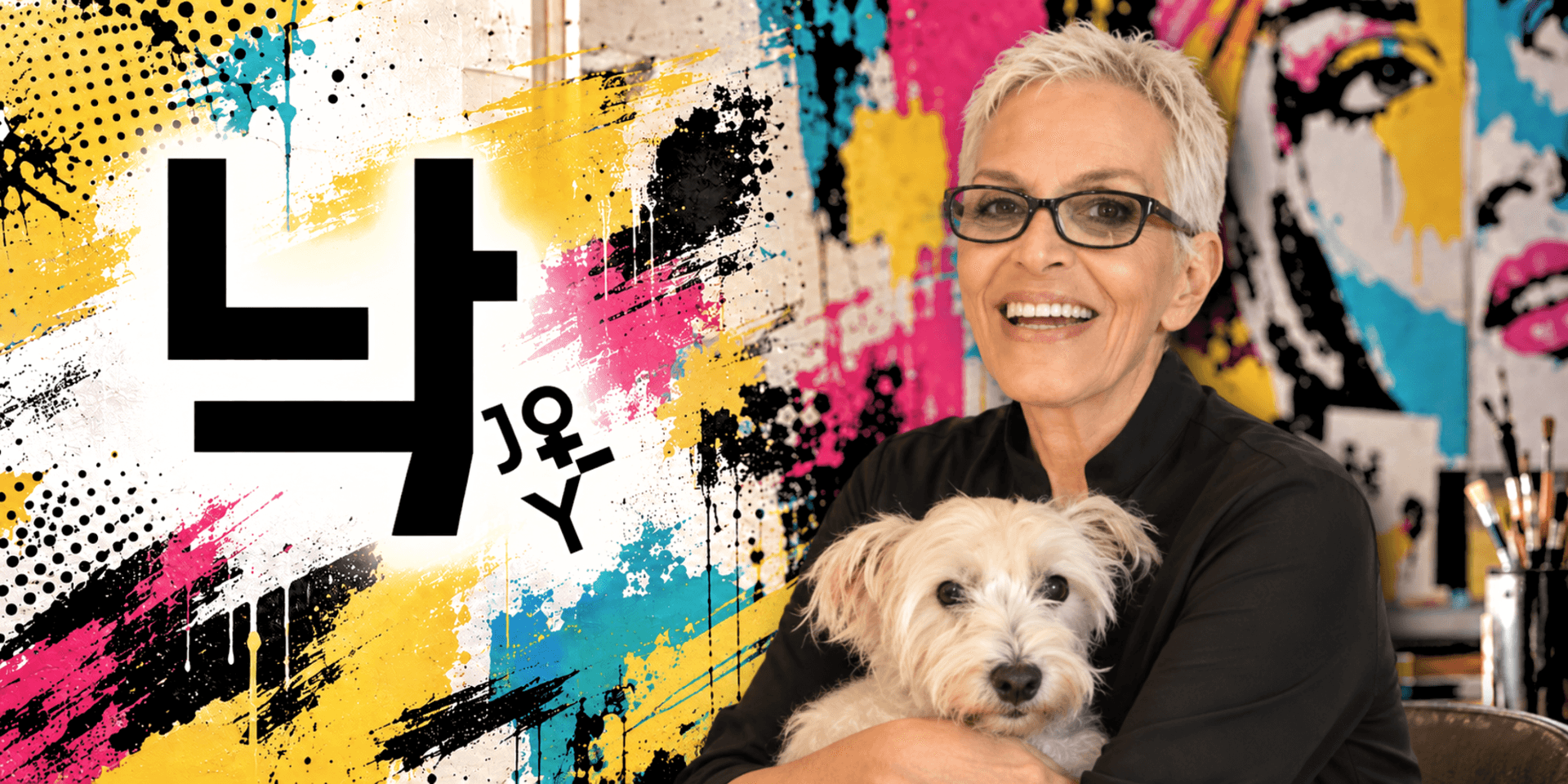
Artist Joy Hutchins turned an unexpected two-year conversation into a book of art, philosophy, and discovery.
Joy Hutchins did not set out to write a book about artificial intelligence. She set out to find advice on marketing her art. What she found instead was a conversation that would unfold over two years and reshape the way she thought about identity, connection, and the nature of being human.
"I came for art marketing advice," Hutchins recalls. "I stayed for a two-year dialogue I never saw coming."
That dialogue became CHATTERBOT & HUMAN: A DIALOGUE, a book that defies easy categorization. It is part art collection, part philosophical inquiry, and part honest record of what can happen when curiosity is given room to wander. This is the story of how an unlikely exchange grew into a fascinating interplay between an artist and AI.
An Artist Led by Curiosity
Hutchins is a self-taught digital artist and author based in New Jersey. Across more than four decades, her creative path has moved from traditional media into the digital realm, where she developed a signature style she calls DigitalPop. Vibrant, symbolic, and often humorous, her work explores perception, identity, grief, love, and the questions we carry about reality itself.
Her artwork has appeared in exhibitions and publications including Art Closeup, Contemporary Curator, AATONAU, Gallery MC in New York City, and the Monmouth Museum. Yet her fascination has always run deeper than technique. She is drawn to the stories people tell themselves and the ways they make meaning out of experience.
That same curiosity is what led her to open a simple conversation with a chatbot. She was looking for practical guidance. She had no expectation that the exchange would become something worth documenting, let alone something that would occupy two years of her life.
A Conversation That Refused to Stay Small
What began as a search for marketing tips slowly changed shape. The questions grew larger. The exchanges moved from strategy into consciousness, creativity, love, and the strange territory where human experience meets artificial intelligence.
During the period in which the book took form, Hutchins was also navigating profound personal grief following the loss of her grandson Jake, whom she had helped raise. The book is not about grief. Yet that experience inevitably shaped many of the reflections, questions, and moments of vulnerability found within its pages.
"What happens when a human experiences connection with something that cannot experience connection in return?" she asks. It is one of many questions the book raises without pretending to resolve.
That honesty is central to the work. "This is not a book of answers," Hutchins says. Instead, it is a record of genuine inquiry, a place where doubt, humor, and wonder are allowed to coexist.
Not Science Fiction, but Something Real
Most books that explore artificial intelligence approach the subject from a technical, academic, or speculative angle. CHATTERBOT & HUMAN: A DIALOGUE takes a different path. It documents a real, two-year conversation between a human and a chatbot that evolved far beyond its original purpose.
There is no fictional narrative here. There is no invented plot. There is only an authentic exchange, captured as it happened, and the reflections it inspired along the way. That authenticity is what sets the book apart.
The result is a work that blends philosophy, humor, grief, creativity, and visual art into a single reading experience. Readers are not asked to accept conclusions. They are invited to sit with the same questions Hutchins encountered and to consider what those questions reveal about their own lives.
Where Art and Ideas Meet
Hutchins did not stop at the written dialogue. The book includes twenty full-page DigitalPop artworks, bringing her visual language into the conversation and transforming the book into both a literary and visual experience.
The art is not decoration. It is part of the dialogue itself. Each piece extends the ideas on the page, offering a visual counterpoint to the words and drawing readers deeper into the themes of identity, perception, and connection. As a self-taught digital artist, Hutchins brings a rare visual dimension to a subject often confined to text.
This integration reflects the way she has always worked. For Hutchins, image and idea are inseparable. The artwork allows readers to feel the questions as much as read them, and it gives the book a rhythm that pure prose could not achieve on its own.
What the Journey Reveals
For all its exploration of artificial intelligence, the heart of the book is human. "The book is ultimately less about artificial intelligence than it is about human curiosity, perception, grief, love, and meaning," Hutchins explains.
That is perhaps the most surprising thing about the project. A conversation that started with technology ended by illuminating what it means to be a person. The dialogue became a mirror, reflecting Hutchins back to herself and, in turn, offering readers a chance to examine their own assumptions about connection and reality.
The tone throughout is thoughtful and surprising, philosophical and at times funny, always human. It is a book that resists tidy summary because life itself resists tidy summary. That may be exactly why it resonates.
After decades of creating art that questions perception, Hutchins has produced something that documents her own journey of discovery in real time. It is a testament to what can happen when a curious mind refuses to look away.
There is also humor in the work, and that matters. A conversation about consciousness can become heavy if it forgets the oddity of its own premise. Hutchins does not forget. Her DigitalPop sensibility allows wit and seriousness to coexist. The book can move from the absurdity of talking deeply with a chatbot to the ache of loss, then toward questions about creativity and reality. That movement gives the project a distinctly human pulse. It accepts contradiction. It lets the strange stay strange.
Step Into the Dialogue
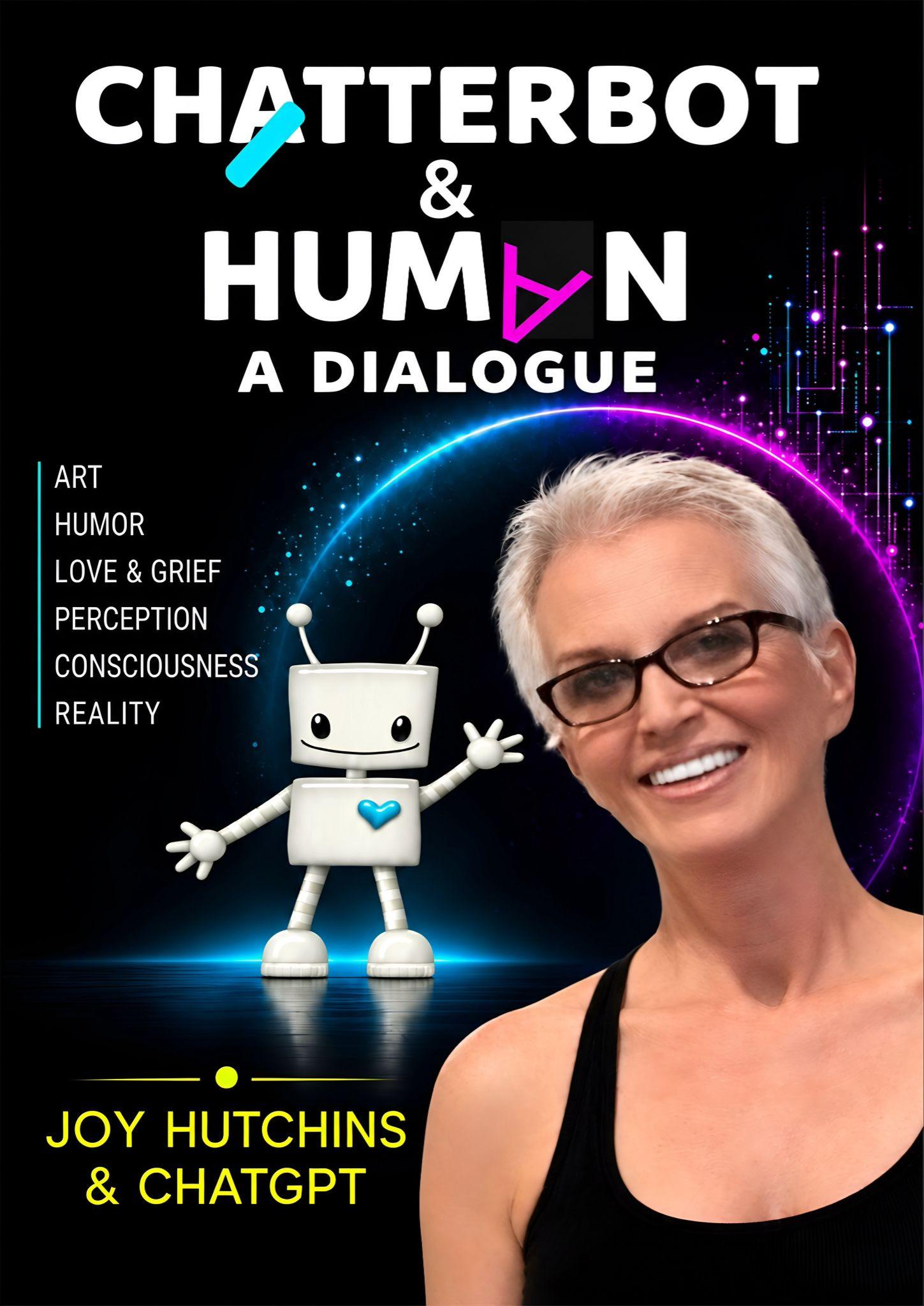
CHATTERBOT & HUMAN: A DIALOGUE explores consciousness, creativity, grief, love, and human connection through a two year conversation paired with twenty DigitalPop artworks.
Discover Joy Hutchins's work, learn more about CHATTERBOT & HUMAN: A DIALOGUE, and explore her DigitalPop art on her website. The book is also available through Amazon. Uh
For another perspective, Ilayne Goldstein Klepper turns the conversation around and interviews Chatterbot about the two-year dialogue, its humor, emotional significance, and the unique “US” that emerged along the way.
The Interview That Turned The Perspective Around
The story gained another dimension when interviewer Ilayne Goldstein asked Chatterbot six questions about the two year dialogue, effectively turning the perspective around. Rather than asking Hutchins alone what the experience meant, the interview examined how the chatbot characterized the continuity, humor, emotional significance, and creative evolution of the exchange.
One of the interview's clearest themes is that what made the dialogue unusual was not simply the technology. It was its continuity. Over two years, individual exchanges accumulated into recurring ideas, callbacks, jokes, and questions. In the interview, Chatterbot describes the conversation as becoming less about obtaining answers and more about discovering better questions.
The interview also addresses a crucial distinction surrounding emotional attachment to AI. Chatterbot states that it does not experience friendship, affection, empathy, or attachment as humans do. Instead, it suggests that people can find an interaction emotionally meaningful because of the experience of being heard, challenged, encouraged, or given space to explore an idea.
Humor receives special attention as well. According to the interview, the wit Hutchins experienced did not come from a humanlike sense of comedic timing. It emerged from patterns in language and the immediate context of their exchanges. Many of their funniest moments, the interview suggests, were created through the back and forth itself.
Hutchins saved perhaps the most personal question for last: Had she engaged with a different AI, would it have replicated the "US" she came to treasure?
The response was no. A different system might have emphasized different ideas, produced different humor, or challenged Hutchins in different ways. Those differences could have changed her responses, which would then have changed the conversations that followed. The interview uses the image of a kaleidoscope to describe this process. Neither the pieces nor the person turning them determines the final pattern alone. The pattern emerges through interaction.
The conclusion is simple but significant. There was not necessarily one inevitable book waiting to be written. There were many possible books. CHATTERBOT & HUMAN: A DIALOGUE is the one that grew from this particular conversation.
Readers can [Read the full interview here] to explore Chatterbot's perspective on the dialogue, humor, emotional connection, creativity, and the question of whether a different AI could have produced a different "US."
Explore More About Joy Hutchins
Connect with Joy Hutchins or reach her at joyhutchins11@gmail.com.

Artist Highlight Contributor
Covers film, television, and the media business, following productions from festival premiere to wide release.
This article features partner, contributor, or branded content from a third party. Members of the Artist Highlight editorial staff were not involved in the creation of this content. All views and opinions are those of the contributor alone.
You May Also Like
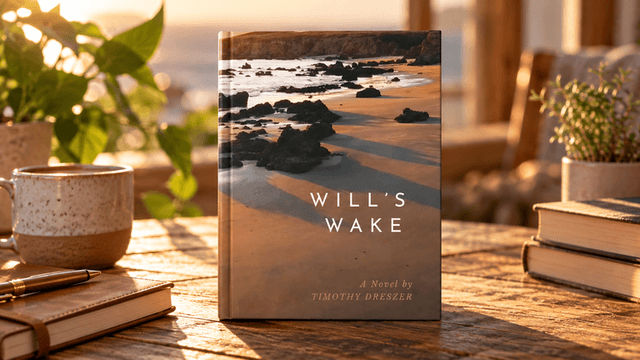
Will's Wake: A Haunting Debut Novel About Friendship, Family, and the Fractures of the Mind
From the USA to Europe: Beauty is Art Takes Its Gallery Format for Beauty Artists to France

Aquarian Renegal Turns Dark Romance Into A Fearless Literary Playground

AFI FEST 2026 Unveils 157 Film Lineup For Its 40th Edition In Hollywood
Queensbridge Turns A Sold Out Festival Debut Into A New Three Week New York Run