
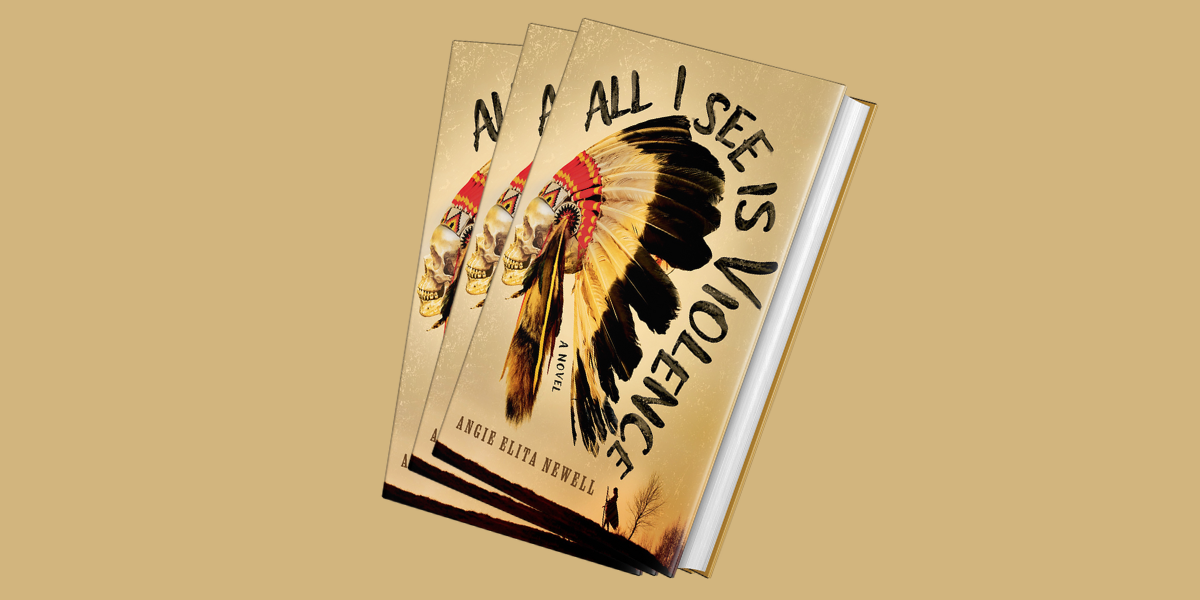
Angie Elita Newell is rewriting the narrative of Indigenous history through her gripping debut novel, All I See Is Violence, and challenging the norms of mainstream storytelling.
History is often told through a singular lens, the one that centers on the dominant culture’s perspective. But for Indigenous author Angie Elita Newell, this kind of storytelling is incomplete. Her debut novel, All I See Is Violence, provides a fresh perspective on pivotal moments in American history, offering readers a window into the lives of those who have long been silenced. By combining powerful fiction with deep historical research, Newell is rewriting the narrative and placing Native American voices at the center of the conversation.
A Powerful Opening: Reclaiming Lost Narratives
When Angie Elita Newell began writing All I See Is Violence, she wasn’t just crafting a historical novel, she was answering a call to reclaim history from the margins. Growing up, Newell, an Indigenous woman, often felt that Native American history was either ignored or misrepresented. She was tired of the stereotypes and the absence of real, complex narratives about her people.
That’s when she decided to write a story that would change the narrative forever, a story of struggle, survival, and resistance. It was her way of ensuring that future generations wouldn’t just learn about the past, but would understand the richness and depth of Indigenous experiences, which have too often been left out of mainstream historical accounts.
A Story Rooted in Truth
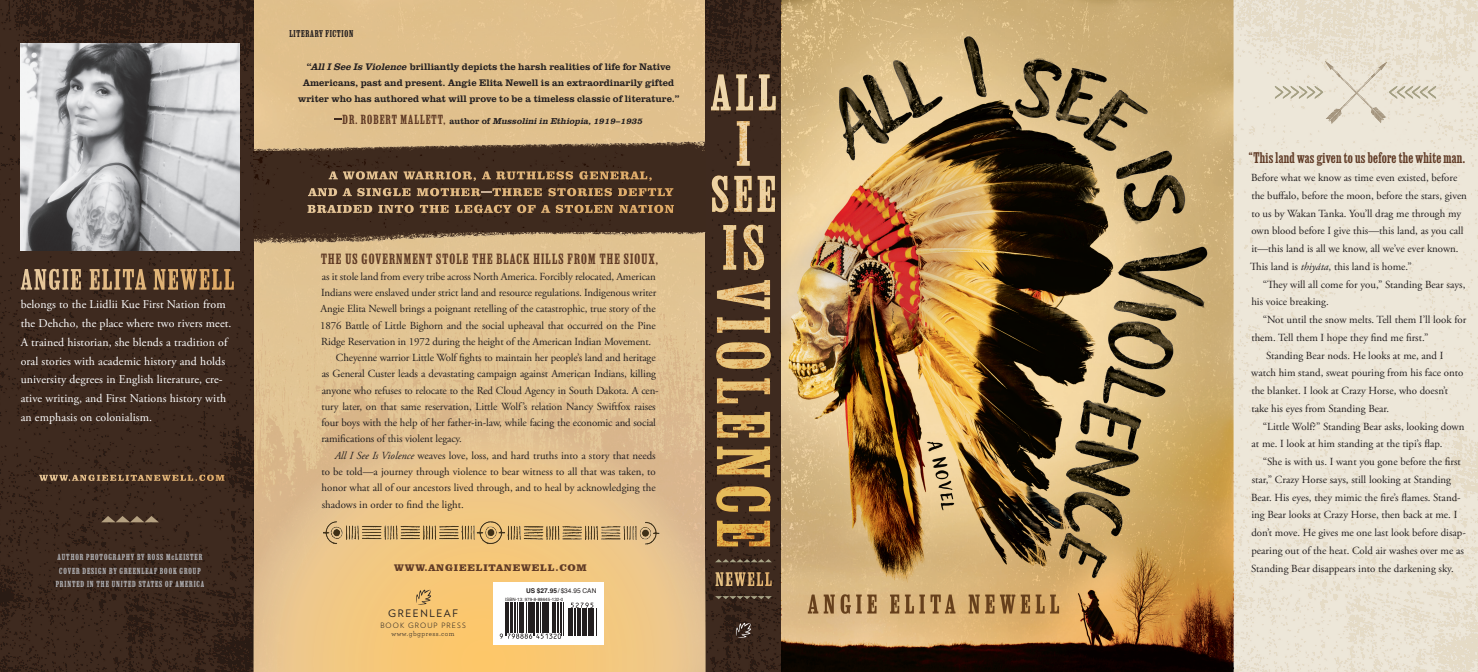
At its heart, All I See Is Violence is more than just a novel, it is a history lesson delivered through the lives of compelling characters. Set against the backdrop of two key moments in American history, the Battle of Little Bighorn in 1876 and the social turmoil on the Pine Ridge Reservation in 1972, the book weaves together the voices of three generations of Indigenous women. Their lives are marked by the same historical trauma, and their struggles to survive and preserve their heritage echo through the centuries.
The novel focuses on Little Wolf, a fierce Cheyenne warrior, and her descendant, Nancy Swiftfox, who is grappling with the effects of her ancestors’ battles. The contrast between these two women, one who fought to protect her people from the U.S. Army and one who lives with the echoes of that violence, is not just a compelling narrative device; it’s a deep exploration of generational trauma and survival.
Through these characters, Newell challenges readers to see the violence and hardships that Indigenous people endured, not as distant events in history but as living, breathing stories that shape the lives of real people today.
The Power of Indigenous Voices in Fiction
While mainstream fiction often relegates Indigenous characters to the background or stereotypes them as noble savages or tragic figures, Newell flips this script. In her novel, Indigenous voices take center stage, and the focus is on the resilience and agency of her characters. They are warriors, mothers, and survivors, not victims of history but active participants in shaping their own destinies.
This focus on Indigenous empowerment is part of Newell’s broader mission to rewrite how Native American history is told. She’s not just sharing the past; she’s advocating for a new understanding of Native American culture and history, one that is complex, multifaceted, and deserving of a more prominent place in the narrative of American history.
From Struggle to Triumph: Newell’s Path to Success
Newell’s path to becoming an award-winning author was far from easy. As a self-published writer with an independent publisher, she faced significant hurdles. While mainstream publishers were hesitant to take on a book that offered such a different perspective on American history, Newell’s determination pushed her to persevere. She worked tirelessly to ensure her vision was realized and was not willing to compromise on the authenticity and power of her story.
Her persistence paid off when All I See Is Violence received critical acclaim and won the IBPA Book Award, including the Gold Award for General Fiction. It wasn’t just an acknowledgment of her writing ability but a recognition of the importance of her voice in a literary world that often overlooks Indigenous authors.
What Makes Angie Elita Newell Stand Out?
What makes Angie Elita Newell’s work so different is her unwavering commitment to authenticity. Not only did she write and research the novel extensively, but she was also actively involved in the design of her book cover. The award-winning cover of All I See Is Violence is just one example of how Newell ensured that every aspect of her work reflects the Indigenous culture and history she is so passionate about sharing.
As an independent author, Newell’s decision to work with an independent publisher allowed her to have full creative control over her book. This independence, coupled with her deep connection to her roots, makes her voice uniquely powerful in today’s literary world.
 Rewriting History One Story at a Time
Through her work, Newell isn’t just writing books, she’s rewriting history. By offering a new, nuanced perspective on well-known historical events, she is providing a platform for Indigenous voices to be heard and understood in a way they never have been before. All I See Is Violence is not just a book; it’s a movement, a call for change in how Native American history is perceived and taught.
Her efforts are making waves in both the literary world and the broader cultural conversation. By shifting the lens through which we view history, Newell is helping to reshape the future for Indigenous communities and ensuring that their stories are told with the dignity and respect they deserve.
Why Read All I See Is Violence?
There are countless reasons to pick up All I See Is Violence. For those looking to gain a deeper understanding of Indigenous history, Newell’s novel offers an eye-opening perspective that will challenge preconceptions and broaden the reader’s knowledge of the past. For fans of historical fiction, the novel is a compelling and well-crafted story that brings the past to life in vivid detail. But most importantly, Newell’s book is a powerful reminder that history is not just something to be studied, it’s something to be lived, remembered, and shared.
If you’re ready to experience a new perspective on American history, learn more about Angie Elita Newell’s journey, and dive into the rich world of All I See Is Violence, you can visit her website at angieelitanewell.com. For updates and to connect with her on social media, follow her on Instagram at @angieelitanewell.
Her book has already earned rave reviews, with Publishers Weekly BookLife calling it “a deeply personal look at the largely ignored lives, experiences, and histories of Indigenous Americans.” You can also read more about the book’s reception on Goodreads: All I See Is Violence on Goodreads.
